The Myth of the Universal Dig-Free Fix
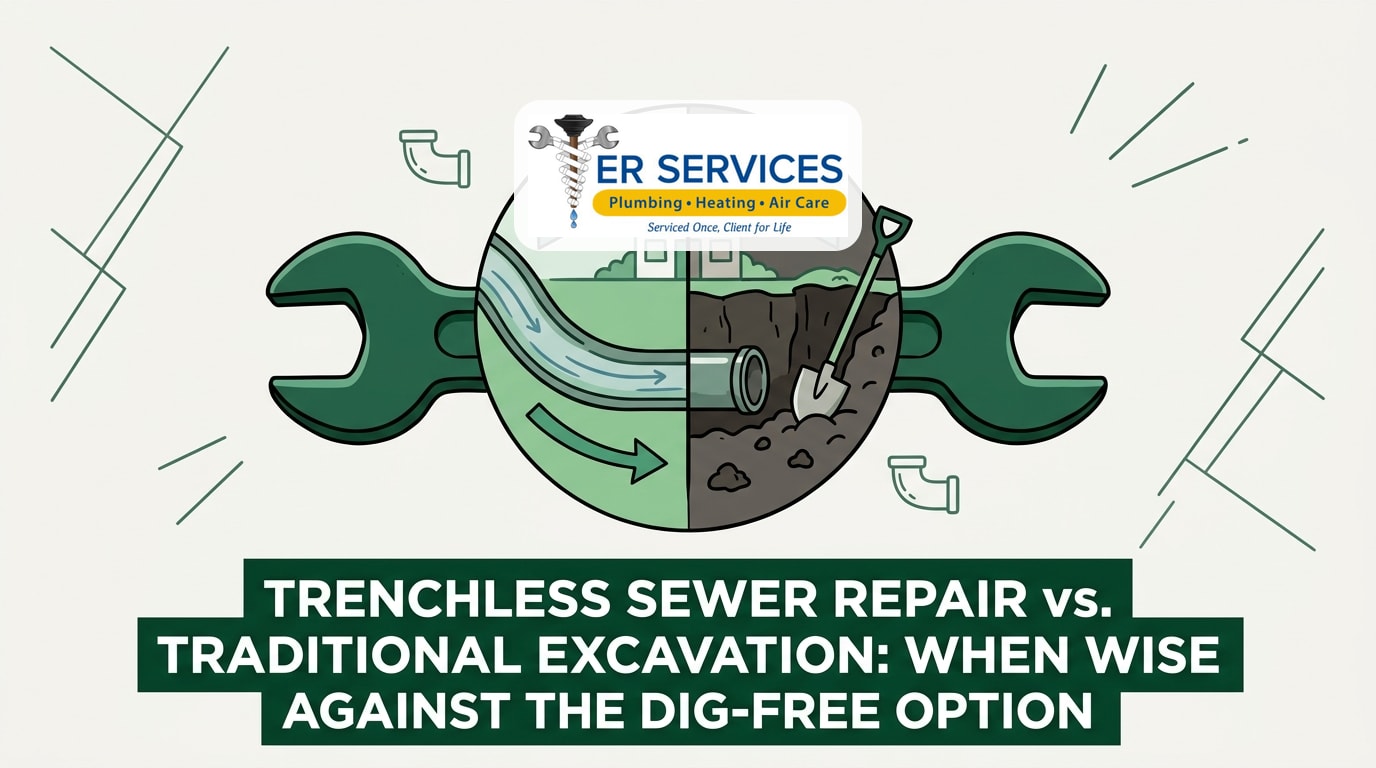
When weighing Trenchless Sewer Repair vs. Traditional Excavation: When We Advise Against the Dig-Free Option, many homeowners assume the trenchless route is always the superior choice. Trenchless sewer repair is often heavily marketed as a universal, magic-wand solution that fixes any underground plumbing disaster without moving a single blade of grass. The truth is, while avoiding heavy landscaping damage is incredibly appealing, a dig-free approach simply does not work for every situation.
If you are dealing with common pipe problems in Charlotte, you need objective facts about what is actually happening underground before choosing a repair method. The ultimate goal of any major plumbing intervention must be a permanent, structurally sound fix—not just a temporary bandage that preserves your lawn.
The critical decision point: The most important moment in the repair process happens right after the initial diagnostic phase. A professional must carefully evaluate the physical reality of your underground lines. Sometimes, that means advising a homeowner against a highly sought-after dig-free solution to prevent a costly long-term failure. A camera inspection showing a severe pipe belly or total collapse is the definitive line between a viable trenchless candidate and a mandatory traditional excavation. If the foundation of the pipe is fundamentally broken, no amount of advanced resin lining will save it.
Why Trenchless Technology Requires a Structurally Sound Host Pipe
To understand why dig-free solutions have limits, you have to understand the physical mechanics of the technology. Trenchless methods do not magically create an entirely new, independent pipe out of thin air. Instead, they rely heavily on the existing infrastructure already buried in your yard.
The problem with degrading materials: Just like the inevitable degradation we see with galvanized steel pipes in older houses, older underground sewer lines made of cast iron, terracotta, or aging PVC eventually lose their structural integrity. They crack, they corrode, and under immense pressure, they can completely crush inward. When a pipe loses its physical shape, it loses its ability to support a trenchless repair.
The cause of trenchless failure: Trenchless lining—specifically Cured-In-Place Pipe (CIPP)—works by pulling a flexible, epoxy-saturated felt tube through the damaged line. Once inflated, the epoxy cures and hardens. However, this process uses the existing damaged pipe as a rigid mold for the new epoxy liner. A liner cannot create a new structural shape; it only seals and reinforces the existing shape. If we perform a camera inspection showing a severe pipe belly or total collapse, that immediately disqualifies the pipe from acting as a mold.
The necessary solution: Attempting to line a severely compromised, crushed, or jagged pipe is a recipe for disaster. The new liner will simply cure into the crushed shape, restricting flow and leading to immediate backups. In these cases, traditional excavation is the only viable solution to remove the compromised host pipe and lay down a completely new, structurally sound line.
The Limitations of Cured-In-Place Pipe (CIPP)
While CIPP is an incredible engineering achievement for sealing minor cracks and stopping root intrusion, it has strict operational boundaries. Homeowners should be aware of these specific limitations before green-lighting a dig-free repair:
- Restores sealing, not structure: CIPP is designed to make a pipe water-tight and smooth, but it cannot rebuild a pipe that has flattened or caved in.
- Requires minimum wall integrity: The host pipe must have enough remaining circular strength to withstand the high-pressure inflation process of the epoxy liner.
- Cannot correct slope: If the original pipe was laid at the wrong angle, or if the ground has shifted the pipe off its correct downward grade, CIPP cannot fix the slope.
How Expansive Red Clay Soil Complicates Dig-Free Solutions
The success of any underground plumbing repair depends heavily on the earth surrounding it. In the Piedmont region, the geotechnical reality of expansive red clay soils introduces a massive variable that often makes traditional excavation necessary over trenchless methods.
The mechanics of expansive soil: Red clay acts very much like a dense sponge. During the heavy seasonal rains typical in the Charlotte and Gastonia areas, this clay absorbs massive amounts of water and swells outward. This swelling exerts immense hydrostatic pressure against buried rigid structures. Conversely, during long, dry summer spells, the clay rapidly dehydrates, shrinking and pulling away from the pipes, completely removing their structural support.
The impact on your sewer lines: This dramatic, continuous cycle of swelling and shrinking physically moves the earth. Over decades, this immense pressure shifts, snaps, and misaligns brittle underground pipes. A pipe that was once perfectly straight can be forced upward, pushed downward, or sheared completely at the joints. When the ground shifts and causes a break, early pipe leak detection becomes critical to stop wastewater from further eroding the soil and worsening the collapse.
Why excavation becomes mandatory: In areas like Gastonia, the shifting red clay soil and heavy seasonal rains create extreme underground movement that trenchless technology simply cannot correct. When soil movement has physically relocated entire sections of the pipe, a flexible liner cannot pull them back into alignment. The only way to restore the integrity of the line is to dig down, remove the shifted soil, re-bed the trench with stable gravel, and install a new pipe that is properly aligned.
The Physical Mechanics: Why a Pipe Belly Defeats a Liner
One of the most common—and most destructive—issues found in aging sewer lines is a "pipe belly." Understanding what a belly is, and why trenchless methods fail to fix it, is crucial for making an informed repair decision.
The problem of lost gravity: Residential drainage relies entirely on gravity. Sewer lines must maintain a precise, continuous downward slope (typically a quarter-inch of drop per foot of pipe) to carry wastewater and heavy solids away from your home. A pipe belly is a localized sag or dip in the sewer line where this downward slope is lost. Instead of flowing smoothly, water and waste pool in this sunken section.
The cause of the sag: Bellies are usually caused by the exact soil shifting mentioned earlier, poor original trench compaction, or massive tree roots growing under the line and heaving it upward on either side of a specific joint. Whether you are dealing with residential sewer systems and storm lines or commercial drainage, a belly creates a permanent trap where debris settles, eventually causing severe, recurring blockages.
The solution requires a shovel: If a trenchless liner is installed into a bellied pipe, the flexible liner simply follows the existing sag. It cures in the exact shape of the dip, effectively locking the belly in place permanently. You will have a brand-new, leak-proof pipe that still pools waste and still backs up into your home. This is why a camera inspection showing a severe pipe belly or total collapse is the exact evidence professionals use to halt a trenchless repair. The only physical way to restore proper slope and grade to a bellied pipe is to excavate the area, rebuild the foundation of the trench, and lay new pipe at the correct, gravity-fed angle.
Objective Diagnostics: Trusting the Camera Over the Hype
With so much conflicting information available online, how do you know which repair method is actually right for your home? The answer lies in objective, visual evidence rather than sales pitches.
The objective truth-teller: When you experience a stubborn sewer line stoppage, the absolute first step must always be a high-definition sewer camera inspection. The camera acts as the objective truth-teller that dictates the appropriate repair methodology. It removes the guesswork and shows exactly what is happening beneath your lawn.
The danger of blind recommendations: There is a significant danger in working with contractors who blindly recommend trenchless repair over the phone without thoroughly evaluating the slope, the structural integrity of the host pipe, and the surrounding soil conditions. Trenchless repairs are highly profitable and heavily marketed, making them an easy sell to homeowners desperate to save their landscaping. However, pushing a dig-free solution on a broken pipe is a disservice.
Our commitment to transparency: Our approach is built on honesty and transparency. We believe in advising customers against a popular "dig-free" service if it will ultimately cost them more in the long run due to their specific pipe condition. A camera inspection showing a severe pipe belly or total collapse provides undeniable visual proof that traditional excavation is required. We view it as an ethical obligation to show you the screen, explain the physics of the failure, and advise against a temporary trenchless bandage when a permanent excavation is the only true fix.
Comparing Repair Methods: When to Trench and When to Line
To help you make sense of your diagnostic report, it helps to look at the exact criteria professionals use to determine whether a pipe can be lined or if it must be dug up. The decision is never based on preference; it is based entirely on the physical state of the host pipe.
Ideal conditions for trenchless repair: Trenchless lining is a fantastic, durable solution when the host pipe is generally intact but suffering from minor issues. If the camera reveals hairline cracking, moderate root intrusion through the joints, or minor corrosion—but the pipe maintains a perfect downward slope and its round shape—trenchless is the ideal choice.
Mandatory conditions for excavation: Conversely, traditional excavation becomes non-negotiable when the pipe's physical geometry is destroyed. Severe bellies, offset joints where two pipe sections no longer meet, collapsed walls, or extreme expansive soil shifting in areas like Gastonia all mandate a shovel-in-ground approach.
Long-term cost implications: The most expensive plumbing repair is the one you have to pay for twice. Paying for traditional excavation once provides a permanent, correctly sloped fix. Paying for a trenchless liner that inevitably fails because it was installed in a bellied pipe means you pay for the liner, and then you pay again for the subsequent excavation.
Signs Trenchless Repair Won't Work
If your diagnostic report includes any of the following findings, a dig-free solution is likely off the table:
- Improper slope or severe pipe belly: The line holds standing water because it no longer flows downward.
- Total structural collapse: The walls of the pipe have crushed inward, blocking the path for a liner.
- Extreme offset joints: The earth has shifted sections of the pipe so far apart that they no longer align.
- Extreme expansive soil shifting: The surrounding earth is highly volatile and requires trench stabilization.
| Repair Method | Ideal Pipe Condition | Ability to Fix Slope | Long-Term Reliability |
|---|---|---|---|
| Trenchless (CIPP Lining) | Intact shape, minor cracks, root intrusion | Cannot fix slope or bellies | Excellent (if host pipe is structurally sound) |
| Traditional Excavation | Crushed, bellied, or severely offset | Fully restores proper downward grade | Excellent (permanent fix with new bedding) |

Frequently Asked Questions About Sewer Replacement Methods
What are the disadvantages of trenchless sewer repair?
The main disadvantage of trenchless sewer repair is that it cannot fix the physical slope or grade of a damaged pipe. Because the process uses the existing pipe as a mold, it requires a host pipe with adequate structural integrity to be successful. If the original pipe is crushed, jagged, or severely shifted by soil movement, the flexible liner will simply cure into that same broken shape, leading to continued drainage problems.
Can all sewer lines be repaired trenchless?
No, not all sewer lines are candidates for dig-free repair methods. A camera inspection showing a severe pipe belly or total collapse disqualifies a line from trenchless repair immediately. The technology is designed to seal leaks and reinforce aging walls, but it cannot rebuild a pipe that has completely lost its cylindrical shape or its downward gravity flow.
When is traditional sewer excavation necessary?
Traditional sewer excavation is necessary whenever the underground pipe has lost its structural integrity, proper grade, or alignment. If the earth has shifted and sheared the pipe at the joints, or if a severe sag has developed that traps standing water, digging is required. Excavation allows technicians to physically remove the broken sections, stabilize the trench bedding, and install brand new pipe at the precise angle required for gravity drainage.
How long does trenchless sewer repair last?
When installed in the right conditions, a trenchless sewer repair can last for several decades, often matching the lifespan of traditional PVC piping. The epoxy resins used in Cured-In-Place Pipe (CIPP) lining are highly durable and resistant to root intrusion and corrosion. However, this longevity is entirely dependent on the initial conditions being appropriate; if installed in a compromised or bellied pipe, the repair will fail much sooner.
Does trenchless repair fix a pipe belly?
No, trenchless repair does not fix a pipe belly. The flexible epoxy liner is pulled through the existing pipe and simply follows the existing sag before hardening. This means the belly is permanently locked in place, and water and solid waste will continue to pool in the sunken section. Fixing a belly requires physically digging up the pipe and re-grading the trench.
Schedule Your Honest Sewer Line Evaluation
Ultimately, the choice between Trenchless Sewer Repair vs. Traditional Excavation: When We Advise Against the Dig-Free Option comes down to the undeniable physical reality buried beneath your lawn. The right repair method depends entirely on the objective condition of your host pipe, the stability of your local soil, and the accuracy of your drainage slope—not on marketing hype or the desire to save a garden bed.
Before committing to any major plumbing repair, ensure you get a transparent camera inspection showing a severe pipe belly or total collapse if one exists. A transparent, honest explanation of the specific physical criteria that dictate your repair method ensures you get a permanent fix, not a temporary bandage. Contact our team today for an objective, expert evaluation of your sewer lines, and let the evidence guide the solution.