Hard water is one of those household problems that sneaks up on you: the white crust around faucets, soap that won’t lather well, and laundry that feels stiff no matter how much softener you use. If your home uses a well or gets water from a mineral-rich municipal supply, you’ve likely noticed the effects. For many Charlotte homeowners weighing their options for water softener installation in Charlotte, NC, the first major decision is whether a salt-based softener or a salt-free conditioner is the better fit.
Both technologies work. Neither is universally better. The right choice depends on your water hardness levels, household size, and what trade-offs you're willing to live with.
What Salt-Based Softeners Do
Salt-based systems use ion exchange to remove calcium and magnesium from the water. Hard minerals pass through a resin tank and are replaced with sodium ions, producing genuinely softened water.
Key facts about salt-based systems:
- Effective for moderate to very hard water, especially when hardness is above about 7 to 10 grains per gallon (GPG)
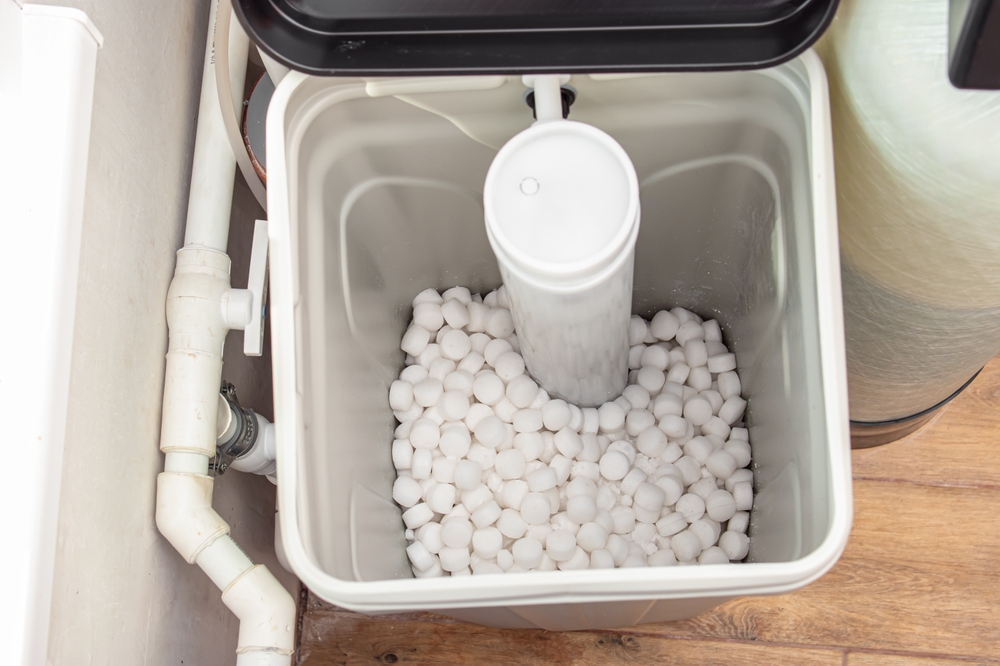
- Require periodic salt refills, often every 6 to 8 weeks depending on water use and system size
- Produce brine wastewater during regeneration cycles
- Installation costs vary based on unit size, plumbing layout, and household demand
They’re widely considered the most effective option for households dealing with severely hard water and noticeable scale buildup on pipes and appliances. Because salt-based systems discharge brine during regeneration, homeowners should check local disposal rules and septic-system guidance before installation.
How Salt-Free Systems Compare
Salt-free systems, often called water conditioners, do not remove minerals. Instead, they use Template Assisted Crystallization (TAC) to change how calcium and magnesium behave so they are less likely to form scale on surfaces.
What to know:
- No salt and no brine discharge
- Best suited for moderately hard water, especially when the goal is to reduce scale rather than fully soften water
- No sodium is added to the water through the conditioning process
- A solid option for households that want to avoid salt discharge or are looking for a low-maintenance scale-control system
Cost and Maintenance Side by Side
Salt-based systems usually carry higher long-term operating costs because of salt purchases and occasional water softener repair, such as valve repairs or resin replacement over time. Salt-free systems generally have lower upkeep, but they may be less effective in areas with very high mineral content.
For context, multiple public sources report that hard water affects about 85% of U.S. homes, so this is not a niche concern.
Water Softener FAQ
What's the one thing people forget to check before buying?
Your actual GPG reading. A water test, not a guess, should drive the decision, because either system can underperform if it is not matched to your water profile.
Can you switch systems later?
Yes, though it involves additional installation work and cost.
Do the systems affect water pressure?
Properly sized units should not affect water pressure. An undersized or poorly installed system can restrict flow.
Ready to Figure Out What Your Home Actually Needs?
E.R. Plumbing Services has been helping Charlotte-area homeowners make these calls since 1997. Our technicians will assess your water, walk you through your options, and install the right system without surprise fees. We serve residential, commercial, and industrial clients, operate 24/7, and back every job with a 100% satisfaction guarantee. We're also proud Angi Service Award winners.
Call us to schedule a consultation.