By the time you notice something is wrong with your gas line, the situation may already be putting people at risk. If your building operates on natural gas, staying alert to early warning signs is one of the smartest operational decisions you can make. That applies to any property owner managing a commercial gas line in Charlotte, NC.
1. There’s a Persistent Rotten Eggs Odor
Natural gas is odorless on its own. Utility companies add mercaptan, a sulfur-based compound that produces that distinct rotten egg smell, so leaks are detectable before they become dangerous.
In Charlotte, NC, if you smell gas, call your gas utility first (for most commercial properties, that’s Piedmont Natural Gas, a Duke Energy company). Confirm the exact provider for your address and call their 24-hour emergency line.
2. You Hear Hissing Near Gas Appliances or Pipes
A hissing or whistling sound near a gas line or appliance is often pressurized gas escaping through a crack or loose fitting. This sound is easy to dismiss as background noise, and that is exactly why it gets missed.
3. Your Gas Bills Are Climbing Without Explanation
A sudden spike in gas usage with no change in operations can point to a leak somewhere in the system. Cross-check your billing history and call for a gas line inspection if the numbers do not add up.
4. Dead or Discolored Vegetation Near Outdoor Lines
Underground gas leaks can suffocate plant roots by displacing oxygen in the soil. If you notice patches of dead grass or wilting plants directly above where gas lines run, that is a red flag worth investigating immediately.
5. Appliances Are Performing Poorly
Burners that won't stay lit, inconsistent heat output, or pilot lights that keep going out may point to interrupted gas flow. Before replacing equipment, it is worth ruling out a supply issue through professional gas line plumbing services.
6. Visible Corrosion or Physical Damage on Pipes
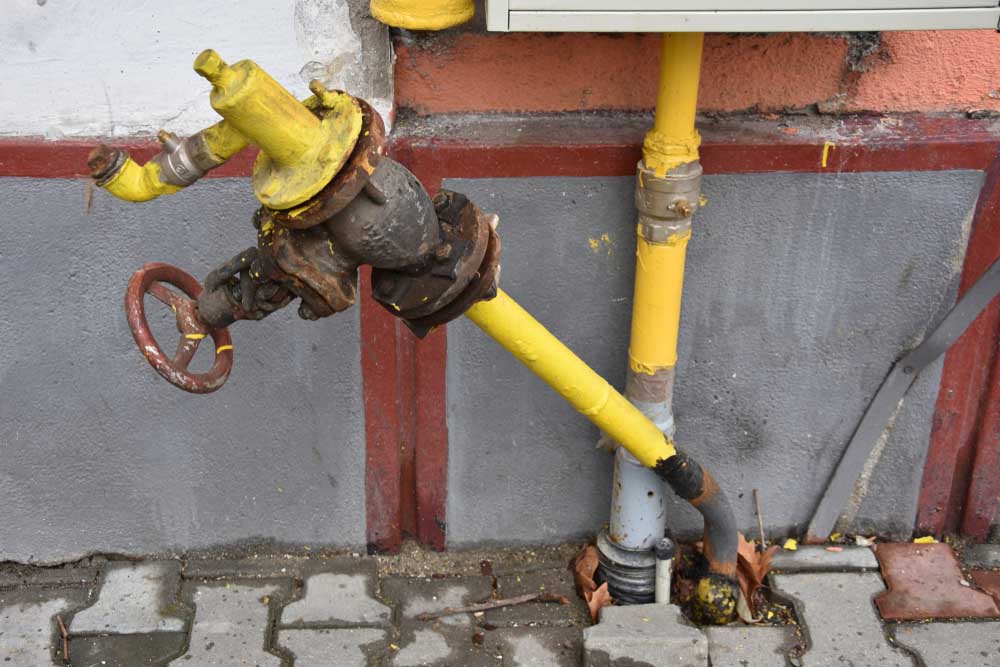
Rust, discoloration, or physical damage on exposed gas piping is a visible sign of deterioration. Corroded pipes are more prone to developing leaks and should be assessed and replaced before failure occurs.
7. Your Building Has Older, Unserviced Gas Infrastructure
Gas line components have a lifespan. If your system has not been inspected or serviced in years, wear may have accumulated without producing obvious symptoms yet. Scheduling gas line repair before problems surface is far more practical than responding to a crisis.
Frequently Asked Questions About Commercial Gas Lines
What should I do the moment I suspect a gas leak?
Evacuate everyone immediately and avoid using electrical switches, phones, or open flames inside the building. From a safe distance, call your gas utility (or 911 if there’s fire, explosion risk, or injury). The utility will shut off gas and survey their side of the service. For leaks or damage on the customer side of the meter (inside the building or from meter to appliances), contact a licensed gas-line plumber to inspect, pressure-test, and repair.
How often should commercial gas lines be inspected?
The National Fuel Gas Code recommends regular inspections based on system age and usage. Most commercial properties benefit from annual checks.
Can renovations or construction damage an existing gas line?
Absolutely. Drilling, digging, or moving walls without first mapping utility lines is one of the leading causes of accidental gas line damage in commercial properties. Always call NC 811 at least 3 full working days before digging so utility lines are marked.
Gas Line Problems Do Not Pause for Business Hours
E.R. Plumbing Services is an Angi Service Award Winner and has been handling gas line emergencies and routine service since 1997 for residential, commercial, and industrial clients. Our highly trained technicians are available 24/7, and we back every job with a 100% satisfaction guarantee. We also offer contact-free service options for your safety.
Call us for gas line services.
Disclaimer: This article is for informational purposes only and does not replace emergency instructions from your gas utility or local authorities. In case of a suspected gas leak, always follow your utility’s emergency guidance and call 911 if there’s fire, explosion risk, or injury.