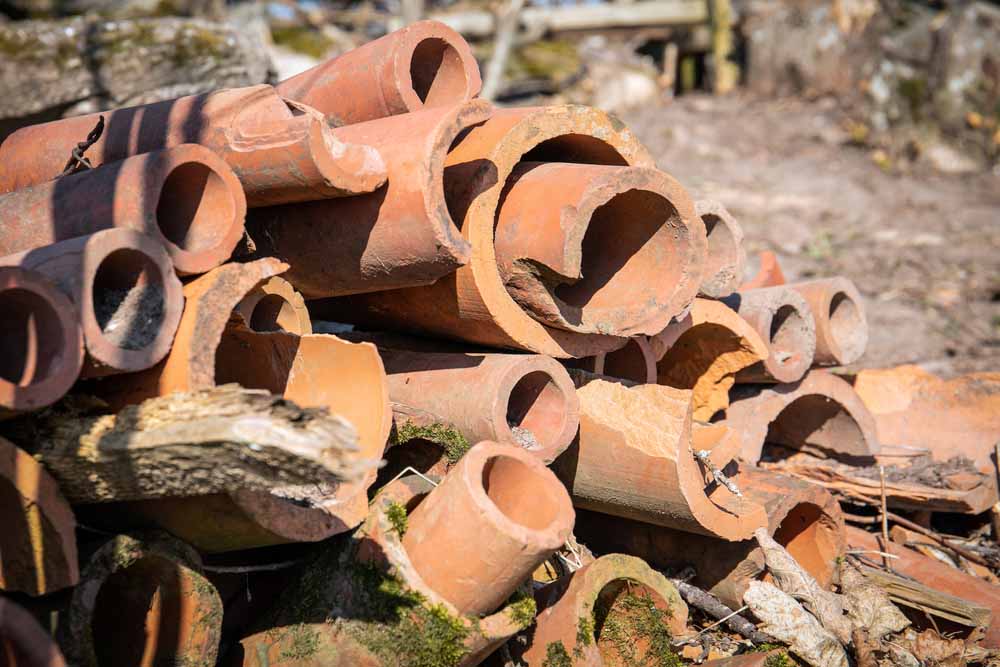
Clay pipes don't last forever. If your property was built before the 1980s, there's a reasonable chance the sewer line underground is clay, and it's already showing its age. Cracks, root intrusion, and joint separation are common, predictable issues in older clay sewer systems (especially with factors like soil pH, tree roots, or ground shifts) but they rarely self-repair and worsen without intervention. E.R. Services has been diagnosing and repairing these issues since 1997, and we offer trenchless services in Charlotte, NC that address the damage without tearing up your property in the process.
Why Clay Pipes Fail in the First Place
Clay was the standard material for sewer pipes for decades, but it was never built to flex, resist root intrusion, or hold up indefinitely under shifting ground. When damage is confirmed, CIPP blue light ray repairs are one of the most effective ways to restore a compromised line from the inside out, without excavation. But before any repair happens, understanding what causes these pipes to fail is what tells you how serious the problem actually is.
Here are the most common problems we see with clay sewer pipes:
- Root intrusion: Tree and shrub roots are drawn to the moisture inside sewer lines. Once they find a joint or a hairline crack, they grow inside the pipe and cause blockages or full breaks.
- Joint separation: Clay pipes are laid in sections. Ground movement, soil erosion, and settling cause these sections to pull apart over time.
- Cracking and collapse: Age, ground pressure, and heavy loads above the pipe, like vehicles or heavy equipment, can fracture clay pipes or cause sections to cave in.
- Buildup and corrosion: Grease, mineral deposits, and waste accumulate inside porous clay surfaces far faster than in smooth-walled modern pipes.
- Soil movement: Ground contracts in dry seasons and expands when wet. Over years, that cycle puts direct stress on buried pipes, widening existing cracks and pulling joints apart, especially in areas with clay-heavy soil or frequent rain.
Signs Your Clay Pipe May Be Failing
Foul odors near drains, patches of unusually green or soggy grass over your sewer line, gurgling sounds, and slow drainage throughout the building are all signals worth investigating.
A Modern Fix Without Tearing Up Your Property
For pipes beyond repair, working with an established pipe lining company means getting a durable replacement installed with far less disruption to your landscaping, flooring, or business operations. The CIPP blue light ray repair process lines the interior of the damaged pipe with a resin material that cures in place, essentially creating a new pipe within the old one without excavation.
We Often Get Asked These
What is the average lifespan of a clay sewer pipe?
Clay pipes typically last between 50 and 60 years under normal conditions, though soil type, root activity, and usage patterns can significantly shorten that range.
Can a partially damaged clay pipe be repaired instead of fully replaced?
Yes. Spot repairs and lining solutions can address localized damage without replacing the entire line, depending on the scope of the deterioration.
Can clay pipes handle heavy water flow from commercial use?
Clay pipes were not designed with high-volume commercial usage in mind. Heavy and consistent water flow accelerates wear at the joints and increases the likelihood of cracking over time.
Get the Right Team on It
Since 1997, E.R. Services has helped residential and commercial property owners across the Charlotte area address sewer line problems using cutting-edge technology and highly trained technicians. We operate 24/7, including full emergency plumbing response, with no extra charges for nights or weekends. Every job is backed by a 100% satisfaction guarantee, and we offer contact-free plumbing services for your safety.
As an Angi Service Award Winner, our reputation is built on showing up, doing the work right, and standing behind it. If you suspect your clay pipes are failing, call E.R. Services today.