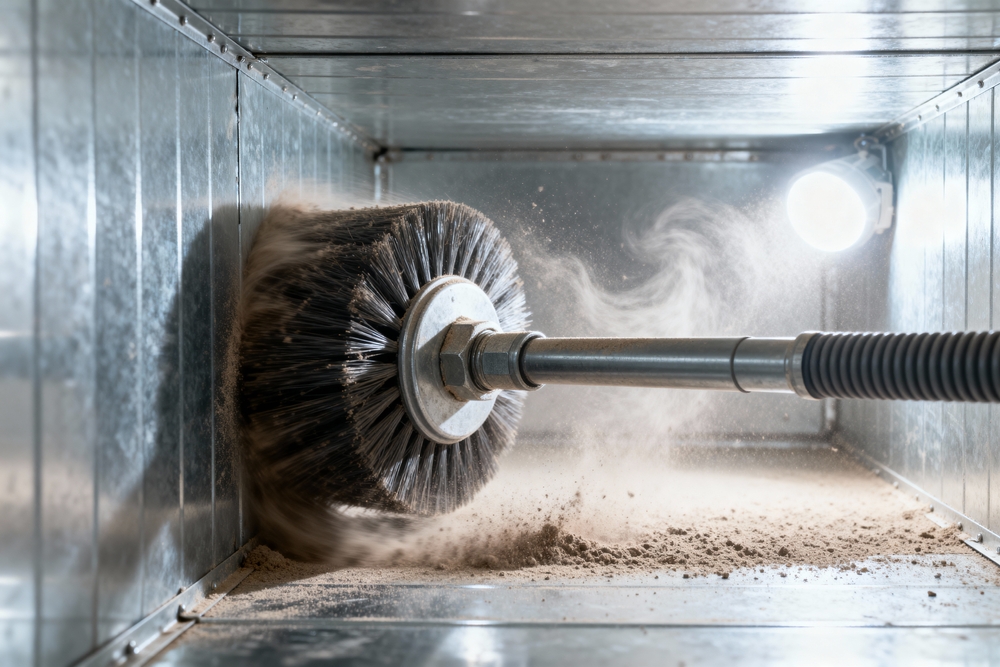
Fall can be the best time for air duct cleaning when a North Carolina home has verified contamination, recent renovation dust, pest activity, or debris entering the living space. The mild transition between cooling and heating makes inspection convenient. However, most homes do not need automatic seasonal cleaning. Evidence inside the system should guide the decision.
The first cool mornings often prompt homeowners to think about the air moving through their homes. The air conditioner has worked through a humid North Carolina summer, while the heating system may soon begin regular operation. Dust around a return grille, a stale odor, or an unexplained layer of debris can make duct cleaning seem like an obvious fall task. Yet a dusty register alone does not prove that the entire duct system needs cleaning. The source may be an overdue filter, a gap around the grille, a leaky return, renovation residue, moisture, or ordinary household dust. A useful decision starts with the location, amount, and source of the material rather than the season printed on the calendar.
At E.R. Services, we help homeowners separate a true duct concern from a filter, airflow, moisture, equipment, or repair issue. We inspect the accessible system, explain what the evidence suggests, and discuss the next practical step. Sometimes cleaning fits the conditions. In other cases, the home needs a filter correction, duct repair, moisture control, pest exclusion, or HVAC service first. Homeowners can review our Air Conditioning Repair & Installation Services in NC when cooling performance or equipment condition is part of the problem. Our goal is to solve the cause instead of selling a routine service that the home may not need.
Why Can Fall Be a Useful Air Duct Inspection Window?
Fall sits between the heaviest cooling demand and the beginning of regular heating use in much of North Carolina. This transition gives a homeowner an opportunity to review what happened during summer. Persistent odors, weak airflow, recurring filter loading, visible debris at several supply registers, or evidence of moisture deserve attention before the system circulates heated air through the house. Milder weather may also make it easier to schedule an inspection without losing cooling during extreme heat or heating during a cold spell. For a home with credible warning signs, those practical advantages can make fall the best time for air duct cleaning or, more accurately, the best time to determine whether cleaning is justified.
Fall does not create contamination by itself, and a seasonal change is not evidence that ducts are dirty. The U.S. Environmental Protection Agency does not recommend routine duct cleaning on a fixed schedule. Instead, it advises homeowners to consider the service when ducts show substantial visible mold growth, vermin infestation, or excessive dust and debris that actually release into the home. That distinction matters because cleaning an otherwise normal system may not solve dust, allergies, odors, humidity, or energy complaints. A proper inspection should identify what is present, where it is located, and why it developed before anyone recommends a service.
The transition season can also expose connected problems. A filter that bows inward may be too restrictive, incorrectly sized, or overdue. Dust streaks near a grille may point to air leakage around the opening rather than material deep inside the duct. Condensation on an insulated duct may indicate damaged insulation, air leakage, or moisture conditions. A musty smell may come from a drain pan, wet insulation, crawl space, coil area, or another source. Therefore, the best time for air duct cleaning is not simply “every fall.” It is when inspection confirms a removable contaminant and the underlying source can be corrected.
Fall Inspection Clues Worth Documenting
Before requesting service, walk through the home while the HVAC system runs. Record where a symptom appears, when it occurs, and whether it affects one room or the whole house. Do not remove access panels or reach into moving equipment. Clear notes help a technician distinguish a local register issue from a return-side leak, equipment problem, pest concern, moisture source, or widespread duct condition.
- Photograph visible material without disturbing it.
- Note whether debris appears at one register or several.
- Record odors during cooling, heating, and fan-only operation.
- Check when the filter was installed and how quickly it loads.
- Note recent remodeling, drywall work, sanding, or floor replacement.
- Listen for scratching or movement that could suggest pest activity.
- Look for water stains, wet insulation, or recurring condensation.
- Record weak airflow, hot rooms, or unusual HVAC run times.
When Does Air Duct Cleaning Make Sense - and When Does It Not?
Air duct cleaning makes the strongest case when a qualified inspection finds a specific condition that cleaning can remove. Examples include substantial debris left after renovation, verified pest contamination after the pests and entry points have been addressed, or heavy deposits that discharge particles from supply registers. Visible biological growth also requires careful evaluation because a substance that looks like mold may need confirmation, and the moisture source must be corrected. If porous or insulated duct material becomes wet or moldy, cleaning may not restore it. Replacement of the affected material may be the sounder option.
Cleaning makes a weaker case when the concern is only a light film on a return grille, ordinary dust on furniture, one dirty filter, or a vague expectation of lower energy bills. Those conditions can have many causes. Outdoor particles enter when doors open. Cooking, fabrics, pets, skin cells, candles, and indoor activities create more particles. Leaky returns may draw air from an attic, garage, crawl space, or wall cavity. Filters can fit poorly or allow bypass. Because a cleaning visit does not correct these sources automatically, the best time for air duct cleaning is after the evidence points to the ducts and before the same source can contaminate them again.
Symptom and Recommended Next Step
| Household Situation | What It May Mean | Recommended First Step | When Cleaning May Fit |
| Renovation or drywall work | Fine construction dust may have entered uncovered returns or ducts | Inspect accessible supply and return areas; replace the filter; review containment used during work | When substantial deposits are confirmed inside the system |
| Confirmed rodent or insect activity | Pests may have entered ducts or left contamination | Arrange pest removal and seal entry points before HVAC work | After the infestation ends and contamination is verified |
| Visible growth on a hard duct surface | Moisture may support biological growth; appearance alone may not confirm mold | Identify and correct the moisture source; obtain appropriate evaluation | When the affected material can be safely cleaned and the source is controlled |
| Wet or moldy insulated duct | Porous insulation may retain contamination | Correct the water source and assess the affected duct material | Cleaning may not be suitable; replacement may be required |
| Dust on one register | Local leakage, room dust, or grille buildup may be responsible | Clean the grille and inspect the nearby connection | Only if inspection finds significant material deeper inside |
| Debris blowing from several vents | Deposits, damaged duct material, or another source may be present | Stop disturbing the material and request system inspection | When loose deposits inside the ducts are confirmed |
| Fast-loading filter | High particle load, bypass, duct leakage, wrong filter, or heavy use may contribute | Verify filter fit and rating; inspect return pathways and equipment | Only when duct contamination is one verified part of the problem |
| Musty odor during operation | Moisture may exist at the coil, drain, duct insulation, crawl space, or elsewhere | Locate the moisture and odor source first | If contaminated duct surfaces remain after the source is fixed |
| No visible contamination or airflow complaint | The system may only need normal maintenance | Continue filter and HVAC maintenance; monitor changes | Routine cleaning is usually difficult to justify |
The table supports a simple rule: diagnose first, clean second. A homeowner should not authorize work based solely on a photograph of a dusty register or a general statement that all ducts become dangerous after a certain number of years. Ask the provider to show the relevant condition inside the system, identify the affected components, describe the cleaning method, and explain how the cause will be controlled. Those questions turn a vague seasonal purchase into an evidence-based home maintenance decision.
How Often Should North Carolina Homes Consider Duct Cleaning?
There is no universal cleaning interval that fits every home. A fixed one-year, three-year, or five-year schedule can overlook both clean systems and homes that need attention sooner because of a specific event. Occupancy, pets, smoking, renovations, moisture, pests, filtration, duct location, return leakage, household activities, and prior contamination all change the picture. The EPA’s need-based approach offers a better framework: inspect when evidence or a known event creates a reason, then choose cleaning only when the findings support it. Under this approach, the best time for air duct cleaning follows a trigger rather than an arbitrary anniversary.
North Carolina homes also vary greatly. One property may have ducts in a sealed, conditioned area, while another routes them through a vented crawl space or hot attic. Coastal moisture, Piedmont humidity, storm-related water entry, construction dust, and local pest activity can affect individual homes differently. These factors do not prove contamination. However, they help determine where an inspector should look. For example, a musty odor in a home with a damp crawl space may call for moisture and return-duct evaluation before cleaning. A recently renovated home may need inspection near uncovered returns and work areas.
Event-Based Inspection and Cleaning Frequency
| Trigger or Condition | Suggested Timing | What to Review | Decision Boundary |
| No symptoms and no known contamination | During normal HVAC maintenance or when conditions change | Filter fit, accessible ducts, drains, coil area, airflow | Do not clean automatically without supporting evidence |
| Major indoor renovation | After dust-producing work ends and before extended HVAC use | Return protection, filter, accessible deposits, registers | Clean if substantial construction debris entered the system |
| Resolved pest infestation | After extermination and entry-point sealing | Nesting material, droppings, damaged ductwork, odor | Clean or replace affected sections based on material and extent |
| Water intrusion or wet duct insulation | As soon as conditions are safe | Moisture source, insulation, biological growth, adjacent materials | Correct water first; replace material that cannot be effectively cleaned |
| Debris visibly exits multiple vents | Promptly | Type and source of material, duct lining, filter, equipment | Clean when internal deposits are verified and the source is controlled |
| Home purchase with unknown history | During HVAC inspection, not automatically at closing | Visible condition, filter, maintenance records, moisture and pests | Base the choice on findings, not the absence of records alone |
| New allergy or respiratory concern | Discuss health symptoms with a healthcare professional; inspect the home separately | Moisture, filtration, ventilation, visible contamination, other sources | Do not present duct cleaning as medical treatment or a guaranteed solution |
| Several years since prior cleaning but no warning signs | No automatic deadline | Continue routine maintenance and observe changes | Time alone does not establish a need |
This event-based model prevents two common mistakes. First, it avoids unnecessary cleaning of systems with no meaningful contamination. Second, it avoids waiting for a calendar deadline after a flood, pest problem, or renovation has created a current concern. Homeowners should keep photos, maintenance records, invoices, filter dates, and notes about household changes. Those records help E.R. Services compare present conditions with recent events and recommend a proportionate response.
How to Decide Whether Fall Duct Cleaning Is the Right Next Step
A sound decision combines evidence, source control, system condition, and household priorities. Start by defining the actual complaint. “The house feels dusty” is useful, but “dark particles appear below three upstairs supply vents within two days of cleaning” gives a technician more diagnostic value. Next, separate visible evidence from assumptions. Then determine whether the source has already been corrected. Cleaning before pest exclusion, moisture repair, or renovation cleanup can lead to rapid recontamination and another unnecessary expense.
Use this step-by-step process:
- Define the symptom. Record the room, vent, odor, material, timing, and HVAC operating mode.
- Check simple maintenance items. Confirm the filter is clean, properly sized, correctly oriented, and seated without obvious gaps.
- Review recent events. Note renovations, pest treatment, leaks, flooding, roof problems, crawl-space moisture, or equipment work.
- Request visual evidence. Ask the inspector to show the condition inside accessible supply and return components.
- Identify the source. Determine whether the material comes from the ducts, equipment, building cavities, indoor activities, or outdoors.
- Correct the cause. Address moisture, pests, damaged ducts, filtration gaps, or construction containment before cleaning.
- Define the scope. Confirm which components will be cleaned and which will be repaired or replaced.
- Review limitations. Ask what the service can reasonably improve and what it cannot guarantee.
- Protect the home. Confirm dust containment, equipment protection, access methods, cleanup, and post-work verification.
- Document the result. Keep before-and-after evidence, the work scope, filter information, and future maintenance recommendations.
This process may confirm that fall is the best time for air duct cleaning, but it may also point to a different solution. A leaking return needs sealing. Damaged insulation may need replacement. A dirty evaporator coil or drain assembly requires equipment service. An overly restrictive or poorly fitted filter needs correction. Moisture in a crawl space needs source control. A dust complaint caused by indoor activities will not disappear simply because a contractor cleans the ducts. The best recommendation addresses the path that created the symptom.
Questions to Ask Before Approving the Work
Homeowners should receive clear, property-specific answers before authorizing cleaning. A provider should explain the evidence, proposed method, system components included, access points, containment plan, and limitations. Avoid claims that one service will cure allergies, sterilize the home, eliminate all dust, or guarantee lower energy bills. Health symptoms require advice from a qualified healthcare professional, while the HVAC evaluation should remain focused on documented building and system conditions.
- What evidence inside my ducts supports cleaning?
- Can you show which supply and return sections are affected?
- What caused the material, and has that cause been corrected?
- Does the scope include the air handler, blower, coil area, plenums, and registers where appropriate?
- Will any access holes be created, and how will you seal them?
- Is any insulated or flexible duct damaged, wet, or unsuitable for cleaning?
- How will you keep loosened debris from entering occupied rooms?
- Are chemical products proposed, and why are they necessary?
- What result can I reasonably expect?
- What repairs or maintenance should occur before or after cleaning?
What Can Air Duct Cleaning Improve - and What Can It Not Guarantee?
When ducts contain substantial loose debris, professional cleaning can remove material from the included components and reduce the chance that those deposits will circulate through the occupied space. The service may also remove debris left by poorly controlled remodeling or contamination associated with a resolved pest problem. If an odor comes directly from removable material on cleanable duct surfaces, cleaning after source correction may help. These are bounded outcomes. They depend on accurate diagnosis, suitable duct material, complete scope, good containment, and correction of the original cause. A homeowner should judge value by the specific problem the service addresses, not by a broad promise of “cleaner air.”
Duct cleaning cannot prevent all household dust. It cannot seal leaking joints, repair torn flexible duct, restore wet insulation, correct an oversized HVAC system, unblock a condensate drain, improve ventilation by itself, or fix moisture entering from a roof or crawl space. It also cannot guarantee relief from allergies, asthma, or other medical symptoms. Indoor air contains particles from many sources, and individual health responses vary. Therefore, the best time for air duct cleaning is when cleaning fits one confirmed part of a wider solution rather than when a homeowner expects it to correct every comfort or air-quality complaint.
Energy savings require the same caution. Cleaning heavily obstructed components may help restore airflow in a specific case, but routine duct cleaning is not a substitute for repairing leakage, maintaining equipment, changing filters, or correcting airflow. The U.S. Department of Energy explains that leaky, damaged, and poorly connected ducts can lose conditioned air. ENERGY STAR also advises regular filter inspection and replacement because a dirty filter restricts airflow and can increase operating costs. If high bills are the main complaint, the evaluation should include equipment condition, thermostat use, envelope leakage, duct leakage, insulation, filter condition, and utility history rather than assuming dirt inside the ducts is the cause.
Cleaning, Sealing, Repair, or Routine Maintenance?
| Observed Problem | Cleaning | Duct Sealing or Repair | HVAC Maintenance or Other Action |
| Substantial loose debris inside otherwise sound ducts | May remove the confirmed deposits | Needed if openings allowed debris to enter | Replace filter and protect returns during future work |
| Air leaks at joints or return connections | Does not stop leakage | Seal or repair verified leakage with appropriate materials | Check airflow and system balance after work |
| Torn, collapsed, or disconnected flexible duct | Cannot restore damaged material | Repair or replace the affected run | Verify delivered airflow after correction |
| Wet or contaminated insulation | Often unsuitable as the only response | Remove and replace material that cannot be cleaned effectively | Correct the moisture source before restoration |
| Dirty or poorly fitted filter | Duct cleaning may be unnecessary | Repair filter rack gaps if present | Install the correct filter and follow an appropriate check schedule |
| Dirty coil, blower, or drain assembly | Duct-only work may miss the source | Repair damage if found | Perform equipment-specific service and drainage correction |
| Dust caused mainly by indoor activities | Cannot eliminate ongoing particle generation | Not applicable unless leakage contributes | Improve source control, cleaning habits, filtration, and ventilation as appropriate |
| Uneven temperatures or weak airflow | Cleaning helps only if verified blockage causes the problem | Repair restrictions, leaks, or poor duct configuration | Assess blower operation, sizing, balancing, filters, and equipment |
The comparison shows why a whole-system view matters. Ducts transport air, but they interact with returns, filters, blowers, coils, drains, insulation, building cavities, attics, and crawl spaces. Cleaning one part without reviewing connected components can leave the original problem untouched. When E.R. Services evaluates the system, we can explain whether the evidence supports cleaning, repair, equipment maintenance, or a combination of actions. That explanation helps homeowners spend money on the problem they actually have.
What North Carolina Conditions Should Homeowners Consider?
North Carolina’s climate can make moisture control an important part of duct decisions. Warm, humid outdoor air can enter attics, crawl spaces, wall cavities, or duct leaks. When that air contacts a cool surface, condensation may form under the right conditions. Storms, roof leaks, plumbing leaks, drain problems, and crawl-space moisture can also wet nearby materials. Still, climate alone does not mean every duct system contains mold or needs cleaning. The relevant question is whether moisture reached the system, what material became wet, how long the condition lasted, and whether the source has been corrected.
Homes across the state also use different heating and cooling arrangements. Some use a central air conditioner with a furnace. Others rely on a heat pump through much of the year. In a heat-pump home, the same ducts may serve both cooling and heating with only a short transition between seasons. That can make fall inspection convenient, but it also means service planning should protect heating availability. A contractor should consider weather, household needs, equipment access, and the duration of any shutdown. If the system serves an older adult, young child, or anyone with temperature-sensitive health needs, safe indoor conditions take priority over a preferred seasonal schedule.
Renovation activity creates another practical trigger. Sanding floors, cutting drywall, replacing cabinets, or performing demolition can release fine dust. Contractors should isolate work areas and protect the HVAC system, but protection sometimes fails or returns remain open. After the work ends, inspect the filter, registers, accessible duct interiors, and nearby equipment. Do not assume every renovation requires full-system cleaning. However, visible deposits distributed beyond the work zone provide stronger evidence than the passage of time alone.
North Carolina homeowners should also consider where the ducts run. An accessible metal trunk in a conditioned basement presents different inspection and cleaning questions from lined ducts in a humid crawl space or flexible ducts in a hot attic. Material, age, accessibility, insulation, previous repairs, and physical condition can limit which methods are safe. The best time for air duct cleaning is only meaningful after the provider confirms that the duct material can tolerate the proposed process without tearing, delaminating, or releasing more material.
Common Air Duct Cleaning Mistakes to Avoid
The most common mistake is buying a whole-home service because of a low advertised price without understanding the scope. A genuine HVAC system may include multiple supply runs, return runs, plenums, registers, an air handler or furnace, a blower, coils, drain components, and accessories. A price that covers only a few vents may not address the suspected source. Conversely, an expensive package may still be unnecessary when the home has no confirmed contamination. Ask for a written scope tied to observed conditions and request authorization before additional work begins.
Another mistake is cleaning before source control. If rodents still enter, moisture continues to wet insulation, or renovation dust still reaches an open return, the system can become contaminated again. The sequence matters: stop the source, repair damaged materials, then clean suitable components if evidence remains. This is especially important with suspected mold. The EPA advises correcting the conditions that caused growth because contamination can return when moisture persists. A provider should never treat an unidentified chemical spray as a substitute for moisture correction and physical cleaning.
Avoid these additional errors:
- Treating every dark mark as confirmed mold without proper evaluation.
- Assuming a dusty return grille proves deep duct contamination.
- Choosing the highest-efficiency filter without checking system compatibility.
- Allowing unqualified workers to cut access holes without a sealing plan.
- Accepting a guaranteed cure for allergies, odors, or energy bills.
- Ignoring damaged insulation, disconnected ducts, or return leakage.
- Running the HVAC system during dusty remodeling without proper protection.
- Cleaning only visible registers while leaving the documented source untouched.
- Approving chemicals without understanding purpose, safety, and material compatibility.
- Failing to request evidence that the agreed components were completed.
Homeowners should also avoid aggressive do-it-yourself duct cleaning. A household vacuum cannot provide professional containment throughout a duct system, and improvised brushes can tear flexible duct, damage internal lining, loosen connections, or push debris farther inside. Opening equipment panels can expose electrical parts, sharp metal, moving components, and conditions that require trained evaluation. Homeowners can safely clean removable grilles when appropriate, replace accessible filters according to instructions, and document visible symptoms. Inspection and internal cleaning should match the system design and the worker’s qualifications.
When Should You Call E.R. Services?
Contact E.R. Services when debris leaves multiple vents, odors repeatedly appear during HVAC operation, a filter loads much faster than normal, pests have entered the system, moisture has affected ducts, or renovation dust may have bypassed protective measures. You should also request help when weak airflow, temperature differences, unusual noise, or rising operating costs accompany the concern. These symptoms may involve ducts, but they can also point to equipment, filtration, airflow, or building conditions. Our team can evaluate the broader system and explain which findings relate to cleaning and which require another solution.
Prompt evaluation matters when you see water near electrical components, smell burning, hear severe mechanical noise, experience repeated breaker trips, or find extensive wet materials. Those conditions may require HVAC repair, electrical attention, water correction, or other specialized help rather than routine cleaning. If visible material may contain sewage, hazardous substances, or extensive mold, avoid disturbing it and ask qualified professionals about safe next steps. Air duct cleaning should never delay an urgent safety response.
E.R. Services supports North Carolina homeowners with cooling-system evaluation, repairs, maintenance, and installation. If the duct concern appears alongside poor cooling, humidity problems, unusual system operation, or aging equipment, visit our Air Conditioning Repair & Installation page to learn how we can help. We use the evidence in the home to recommend cleaning, correction, monitoring, or HVAC service. We do not treat fall as proof that every duct system needs the same work.
Final Decision: Is Fall the Right Time for Your Home?
Fall offers a useful pause between seasons. Homeowners can review summer performance, inspect visible areas, check maintenance records, and address problems before extended heating use. That makes fall the best time for air duct cleaning when substantial contamination has been verified, the source has been stopped, the duct material can be cleaned safely, and the service forms part of a complete solution. Fall is not a universal cleaning deadline. A clean, dry, intact system with no meaningful warning signs may need only routine filter and HVAC maintenance.
Use three questions to make the final choice: What evidence shows that the ducts are contaminated? What caused the condition? What work will prevent it from returning? If the answers remain unclear, do not guess from the age of the home or the appearance of one register. Ask for a system-specific inspection that distinguishes cleaning from sealing, repair, moisture correction, filter improvement, and equipment maintenance.
At E.R. Services, we help homeowners understand what their HVAC system actually needs. We inspect relevant components, explain limitations, and connect the recommendation to observed conditions in the home. This approach can prevent unnecessary work while helping you respond promptly to real contamination, airflow, moisture, or equipment concerns. Use the guide above, then schedule an evaluation with E.R. Services if the source, condition, or safest next step remains unclear.
Frequently Asked Questions
1. Does turning on the heat for the first time mean my ducts need cleaning?
No. The first heating cycle can produce a temporary dusty or warm odor as settled material on heating components encounters heat, especially after months without operation. That brief odor does not prove that the ducts contain heavy debris. Turn the system off and seek prompt help if the smell resembles burning plastic, electrical insulation, fuel, smoke, or another unsafe condition. If a mild odor persists through repeated cycles, appears in specific rooms, or arrives with visible debris, ask for an HVAC inspection. A technician can review the furnace or heat pump, filter, blower area, coil, drains, accessible ducts, and electrical components. The best time for air duct cleaning is after that inspection confirms that removable material inside the ducts causes the problem.
2. Can duct cleaning reduce dust on furniture throughout my house?
It may help when substantial loose deposits inside the duct system are verified and those deposits enter the rooms. However, household dust also comes from clothing, bedding, carpets, pets, cooking, outdoor air, open doors, indoor projects, and normal daily activity. Air leakage around return grilles or in return ducts can pull particles from attics, crawl spaces, garages, or wall cavities. A poorly fitted filter can allow bypass as well. Cleaning cannot stop these ongoing sources. Before approving service, ask where the dust originates, whether it appears inside the ducts, and whether sealing, filtration correction, source control, or routine cleaning practices deserve priority. A specific diagnosis creates a more realistic expectation than a promise to eliminate dust.
3. What should I do before an air duct inspection?
Prepare information that helps the technician trace the condition instead of starting with assumptions:
- Photograph visible debris, staining, or damaged material without disturbing it.
- Write down which rooms and vents show the problem.
- Note whether odors occur in cooling, heating, or fan-only mode.
- Record the filter size, rating, installation date, and replacement pattern.
- Gather HVAC maintenance and repair invoices when available.
- List recent renovations, leaks, pest activity, or storm damage.
- Identify rooms with weak airflow, temperature differences, or humidity concerns.
- Keep pets and stored items away from equipment and accessible registers.
- Do not apply sprays, fragrances, or household cleaners inside the ducts.
- Explain any temperature-sensitive household needs before service begins.
This record helps E.R. Services compare symptoms, recent events, and system behavior. It can also show whether fall is the best time for air duct cleaning or whether another repair should happen first.
4. How can E.R. Services tell whether I need cleaning or duct repair?
E.R. Services looks at the type of evidence and the physical condition of the system. Loose, removable deposits inside sound ducts may support cleaning. Gaps, disconnected runs, torn flexible duct, damaged insulation, crushed sections, or return leakage call for repair or replacement instead. Water staining and biological growth require source investigation before either path. We can also consider filter fit, equipment cleanliness, airflow, room-to-room comfort, recent work, pest history, and duct location. Because several conditions can exist at once, the recommendation may combine actions in a specific order. We explain what was observed, what remains uncertain, and which step addresses the source. That approach helps avoid cleaning damaged material or repairing a system without removing verified contamination.
5. Should I schedule duct cleaning before or after replacing my HVAC system?
The correct sequence depends on the findings. If the ducts contain confirmed debris and will remain in use, the installation plan may include cleaning at an appropriate stage so material does not enter new components. However, damaged, undersized, poorly configured, or leaky ducts may need repair or replacement rather than cleaning alone. If renovation work accompanies the HVAC project, protect the system from construction dust and wait until dust-producing tasks finish before final cleanup and commissioning. The installing contractor should define how ducts, returns, filters, coils, and new equipment will remain protected. Do not schedule a separate cleaning automatically without coordination. A unified plan prevents duplicated work and helps ensure that the new system starts with suitable airflow and clean, intact connected components.
6. What should an E.R. Services duct-related estimate explain?
A clear estimate should connect every proposed task to the observed condition. Ask E.R. Services to explain:
- Which supply, return, and equipment components the scope includes.
- What evidence supports cleaning, repair, or another service.
- How workers will access the system and close access points afterward.
- How the process will contain loosened dust and protect occupied rooms.
- Whether flexible, lined, or insulated ducts need special handling.
- Which moisture, pest, filter, or leakage issues require correction first.
- Whether any chemical product is proposed and why.
- What before-and-after verification the homeowner will receive.
- What the quoted price includes and what could change the scope.
- Which results are reasonable and which cannot be guaranteed.
This information allows the homeowner to compare complete scopes rather than relying on vent counts or an unusually low headline price.
7. Is air duct cleaning safe for flexible or internally lined ductwork?
It can be appropriate in some cases, but the method must match the material and its condition. Flexible duct can tear, collapse, disconnect, or suffer internal damage when workers use unsuitable tools or excessive force. Internally lined duct can deteriorate, become wet, or release material if the lining has already failed. Porous insulation affected by moisture or mold may not be restorable through cleaning and may require replacement. Before work starts, the provider should identify the duct type, inspect accessible sections, note existing damage, and explain the cleaning method. Ask how the team will avoid abrasion and how it will verify the system afterward. The best time for air duct cleaning is never before confirming that the proposed process is compatible with the installed material.
8. Which warning signs require prompt HVAC attention instead of routine cleaning?
Some symptoms call for a safety or repair response before anyone discusses cleaning:
- Burning, electrical, fuel, or smoke odors.
- Repeated breaker trips or damaged wiring.
- Water near electrical controls or ceilings.
- Severe vibration, grinding, or metal contact.
- A disconnected, crushed, or visibly torn duct.
- Sewage, floodwater, or hazardous material entering the system.
- Extensive wet insulation or rapidly spreading visible growth.
- A heating system that will not operate safely.
- Indoor temperatures that threaten vulnerable occupants.
- Debris that may contain pest waste or another harmful substance.
Avoid touching electrical equipment or disturbing questionable material. Turn equipment off only when doing so is safe, leave the affected area when necessary, and arrange qualified assistance. Cleaning can wait until urgent hazards and the source of contamination have been controlled.
9. Will a higher-MERV filter keep my ducts clean after service?
A more efficient filter may capture smaller particles, but the highest available rating is not automatically the best choice for every system. Filter dimensions, surface area, rack design, blower capacity, duct resistance, household needs, and manufacturer guidance all matter. A filter that creates excessive resistance can reduce airflow and affect comfort or equipment operation. A filter that fits poorly may allow air to bypass around the edges regardless of its rating. Ask an HVAC professional which filter range suits the system and how often you should inspect it during heavy cooling and heating periods. Good filtration can help limit future buildup, but it does not correct moisture, pests, duct leakage, damaged materials, or indoor particle sources. Those conditions require their own solutions.
10. Why should I ask E.R. Services to evaluate a fall duct concern?
E.R. Services can assess the duct concern as part of the connected heating and cooling system instead of treating every dusty register as proof that cleaning is necessary. We review accessible components, filter condition, airflow symptoms, equipment behavior, moisture clues, recent household events, and physical duct condition. Then we explain whether the evidence points toward cleaning, sealing, repair, maintenance, source control, monitoring, or a coordinated combination. Our North Carolina homeowners receive a recommendation tied to the condition of their home, along with clear limits on what a service can accomplish. If fall HVAC use reveals debris, persistent odors, moisture, or airflow problems, contact E.R. Services to schedule an evaluation and identify the right next step before the issue grows.